

Mail ID
Call Now
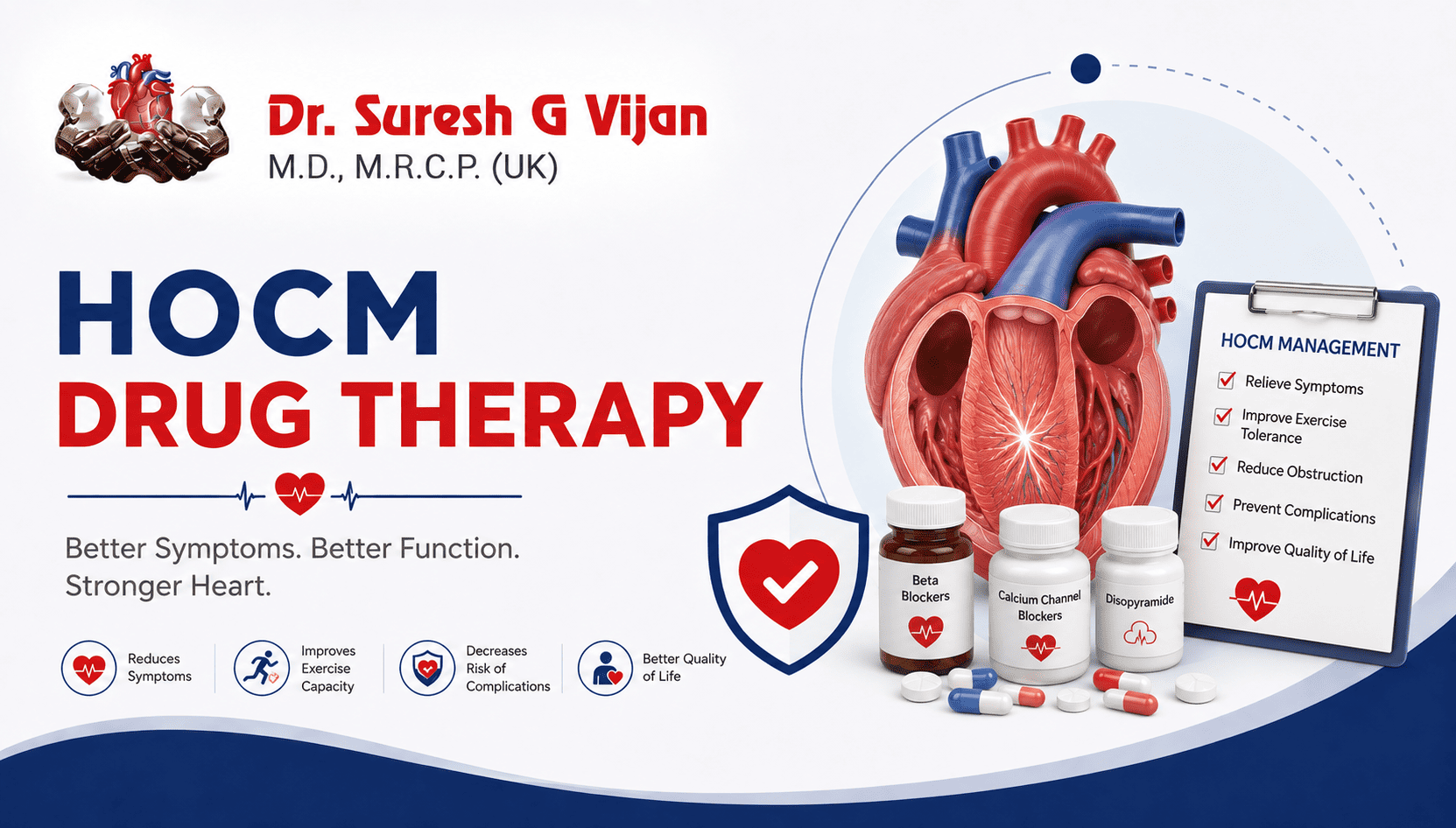
Hypertrophic obstructive cardiomyopathy needs careful medical administration to alleviate the symptoms and prevent complications of the condition. Dr. Suresh Vijan, who performed the first septal ablation for this disorder in 1997 and has been practicing interventional cardiology for 35 years, is among the most competent doctors to treat patients with the condition.
Dr. Suresh Vijan, M.D., M.R.C.P. (UK), is an interventional cardiologist par excellence, serving his patients in Mumbai for over three decades. He was a part of history when he could reach several milestones, including performing the first multidisvessel angioplasty in the city and performing the first-ever AICD implantation. Apart from this, he was also the first cardiologist in Asia to perform the AXXESS bifurcation stenting. The introduction of septal ablation for hypertrophic obstructive cardiomyopathy, carried out in 1997, propelled him into the limelight of HOCM treatment long before other options had emerged in India. As a certified proctor for coronary angioplasty and bifurcation stenting, he has trained many cardiologists in India and other countries, including China and Vietnam by organizing live demonstrations. Dr. Vijan was honored with the Hiranandani Oration in 1998, and with his expert history stands as the best option for HOCM drug therapy in Mumbai.
Hypertrophic obstructive cardiomyopathy (HOCM) is a condition which is defined by abnormal thickening of heart muscle, in particular of septum, resulting in blockage of blood flow out of the heart and causing serious symptoms. Drug treatment in case of HOCM aims at lowering heart contractility and relieving outflow obstruction as well as controlling the symptoms such as breathlessness and chest pain. The list includes the known medications such as beta-blockers and calcium channel blockers as well as newer specialized drugs like cardiac myosin inhibitors that act on the disease mechanism directly. The choice of medications and their dosing demands doctors' experience and skill, since patients respond to the same types of medication differently.
HOCM medication treatment typically consists of several types of drugs. Beta-blockers are the first medications administered, and help reduce both heart rate and contractility to reduce the outflow obstruction. Calcium channel blockers, especially non-dihydropyridine, can be prescribed either instead of or in conjunction with beta-blockers for patients where beta-blocers cannot be tolerated. Disopiramide is another antiarrhythmic agent that may be used with other drugs to improve the degree of obstruction in symptomatic cases. More recent cardiac myosin inhibitors are new drugs created specifically to work upon the excessive muscle contractility that is the hallmark of HOCM.
Hypertrophic obstructive cardiomyopathy is mainly caused by genetic mutations that affect the proteins responsible for cardiac muscular development. The disease is typically inherited in an autosomal dominant way; hence, family history strongly influences the chances of getting the disease. In certain cases, even if there is a family history of the genetic condition, the specific genetic cause remains unknown. Although the disease is genetic, certain events like heavy exercising or dehydration can aggravate symptoms and cause outflow blockage in the affected individuals. Due to the inherited nature of HOCM screening of first-degree relatives is often recommended after the diagnosis of the disease.
Individuals suffering from hypertrophic obstructive cardiomyopathy (HOCM) present various symptoms regarding severity. Among some commonly reported symptoms occurs one of breathlessness during physical activity, chest discomfort, palpitations, light headedness, and fainting specifically during exercise. Fatigue and low tolerance for exercise are also obtained frequently in patients. Furthermore, in cases of severe HOCM, patients may be susceptible to life-threatening arrhythmias or even symptoms of congestive heart failure. Thus, seeing a specialist that offers the best HOCM drug therapy available in Mumbai is vital because of the fact that the mentioned collection of symptoms may be confused with milder health conditions.
The treatment regimen suggested by Dr. Vijan for HOCM drug therapy starts with an elaborate diagnostic evaluation procedure that includes an important aspect of echocardiography. After a thorough examination, the doctor determines the extent of outflow obstruction and the degree of severity of symptoms which serves as a basis for therapy selection. The first step in the process of dispensing medication would be to prescribe first-line drugs based on diagnosis and then adapt treatments depending on their efficacy and safety. In case any patient's symptoms persist despite their optimal drug therapy, the doctor would treat the disorder successfully thanks to his valuable knowledge and experience in septal ablation which is an effective treatment option for patients with this ailment.
Receiving detailed heart imaging, continuous assessment while monitoring patients as well as a complete evaluation process that goes beyond the initial diagnosis has its benefits. At Dr. Vijan's clinic, patients receive constant follow-up to check the efficacy of treatment, supervise possible side effects whilst also adjusting the therapy in a timely manner which is what makes patients seek the Best HOCM drug therapy in Mumbai.
In the long-term care of patients suffering from hypertrophic obstructive cardiomyopathy (HOCM), echocardiograms, assessment of symptoms, and review of medications have to be done regularly without fail. The follow-up visits are necessary to make necessary adjustments in doses and to detect the progress of the disease. In addition to this, patient education is an extremely important aspect in the situation of HOCM, which teaches the patient how to adhere to the treatment and what he or she has to do to prevent deterioration of the health condition.
Hypertrophic obstructive cardiomyopathy is a condition that requires a sophisticated approach to treatment in order to manage the symptoms and limit the risk of complications. With an extensive background in the field of HOCM research and treatment since 1997 and experience in various cardiac procedures, Dr. Suresh Vijan is a leading specialist in HCM-related drug therapy in Mumbai, providing personalized care.
Dr. Suresh Vijan is a leading interventional cardiologist in Mumbai with over 35 years of clinical experience and expertise in hypertrophic cardiomyopathy.
HOCM drug therapy involves medicines used to manage symptoms and improve heart function in patients with hypertrophic obstructive cardiomyopathy, based on individual clinical needs.
Yes. Regular cardiology follow-up can help monitor symptoms, heart function, treatment response, and disease progression.
Dr. Suresh Vijan has more than 35 years of cardiology experience and specializes in interventional cardiology, hypertrophic cardiomyopathy, and septal ablation.
You can contact Dr. Suresh Vijan's clinic in Khar, Mumbai, to schedule a consultation and discuss evaluation and treatment options for hypertrophic obstructive cardiomyopathy. His listed clinic address is on Linking Road, Khar West.
Hypertrophic cardiomyopathy (HCM) is a genetic disease that causes thickening (hypertrophy) of the heart muscle. The heart muscle cells enlarge more than they should, and scarring often develops between the cells.
The left and right ventricles are the 2 lower chambers of the heart. A muscular wall called the septum separates these 2 ventricles. With HCM, the walls of the ventricles and septum may thicken abnormally.
Above Short Content Reference Link : https://www.hopkinsmedicine.org/health/conditions-and-diseases/hypertrophic-cardiomyopathy
Such a great experience with Dr Suresh Vijan. Very friendly and compassionate doctor. Took all the time to go over my questions. We went there for my father Mr. Najimuddin Kharib treatement. It was our first experience with him and he treated us in a very good way...
Renown Cardiologist, well experienced n mature experience in the field n an appointment will convince you, he is the person with who whom you should look for
We took our father to him after consulting a few other doctors who recommended bypass surgery but when we met Doctor he was very confident about the suitable treatment for him which was angioplasty. we are so grateful to him. He gave us hope and made us clear about what can be done. He definitely is the leading doctor in this country. I recommend him 100%.
Very polite and humble doctor, He explained everything very clearly and gives better advice. I recommend to him.
Dr. Suresh G Vijan Senior interventional cardiology consultant in Lilavati Hospital Mumbai. I took an appointment 1 year ago for my cardiac disease. he is a very humble doctor and gave the right advice about your health problems.